
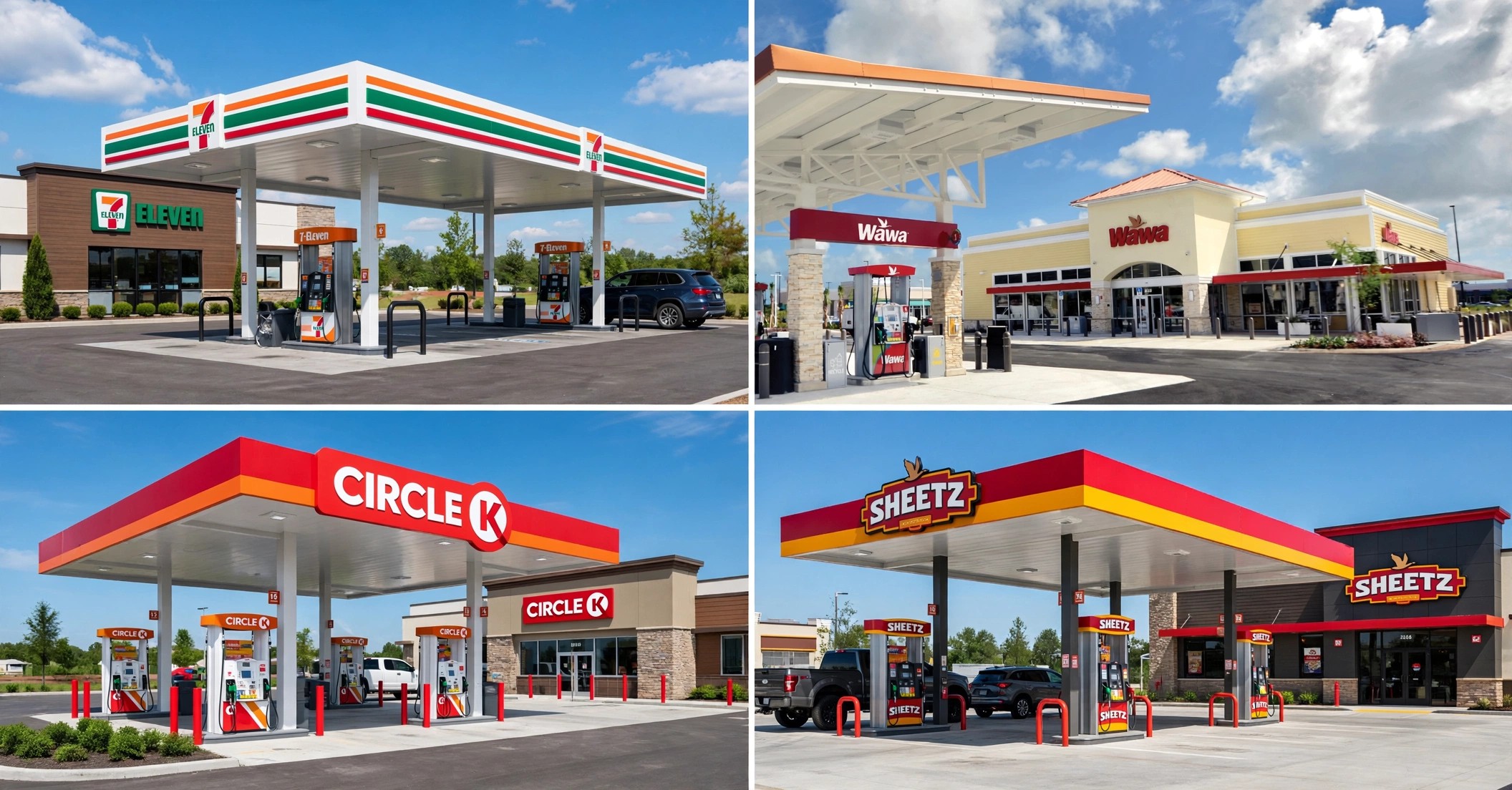
Gas Station Bonus Depreciation Date July 20, 2026
The most tax-efficient asset in net lease isn’t the one with the highest cap rate.
Net lease investors will negotiate for weeks over 25 basis points. Then they overlook a section of the tax code worth ten times that.
Here’s what I mean.
Most commercial real estate depreciates over 39 years. Slow, steady, unremarkable.
Gas stations are different.
If a property qualifies as a “retail motor fuels outlet” under the tax code, the entire building — not just the carve-outs from a cost segregation study — drops to a 15-year recovery period. And property with a recovery period of 20 years or less is eligible for 100% bonus depreciation, which Washington restored and made permanent in 2025.
Translation: a qualifying gas station buyer can potentially deduct the full depreciable basis — everything but the land — in year one.
The qualification tests are simpler than most investors expect. A property generally qualifies if ANY one of these is true:
1. 50%+ of gross revenue comes from petroleum sales
2. 50%+ of floor space is devoted to petroleum marketing
3. The building is 1,400 square feet or less
That third test does a lot of quiet work. Plenty of c-stores clear it on square footage alone.
The illustrative math: a $4M gas station with $1M allocated to land carries roughly $3M in depreciable basis. On a standard 39-year schedule, that’s about $77K in annual deductions. As a qualifying motor fuels outlet with bonus depreciation, the year-one deduction can approach the full $3M.
For a high-income investor, that’s the difference between a good yield and an exceptional after-tax return. It’s how a 5.50% cap gas station can outperform assets trading 100+ basis points wider — after tax.
Three things I tell buyers before they get too excited:
→ Land allocation is everything. You can’t depreciate dirt, and aggressive allocations invite scrutiny. Get an appraisal.
→ Depreciation is deferral, not free money. Recapture comes due at exit — unless you keep exchanging.
→ How much of the deduction you can actually use in year one depends on your income profile. That’s a conversation for your CPA, not your broker.
Here’s the part I find most interesting after 30 years in this market: gas stations were already the most in-demand 1031 asset of 2026. Now the buyer pool is waking up to a second tax story layered on top of the first.
When an asset class combines accessible price points, essential-use real estate, and the most favorable depreciation treatment in net lease — the demand isn’t a mystery. It’s math.
Randy Blankstein
President
The Boulder Group