
Rising Net Lease Cap Rates Put Pressure on Year-End Activity Date October 2, 2026
By Randy Blankstein, President, The Boulder Group
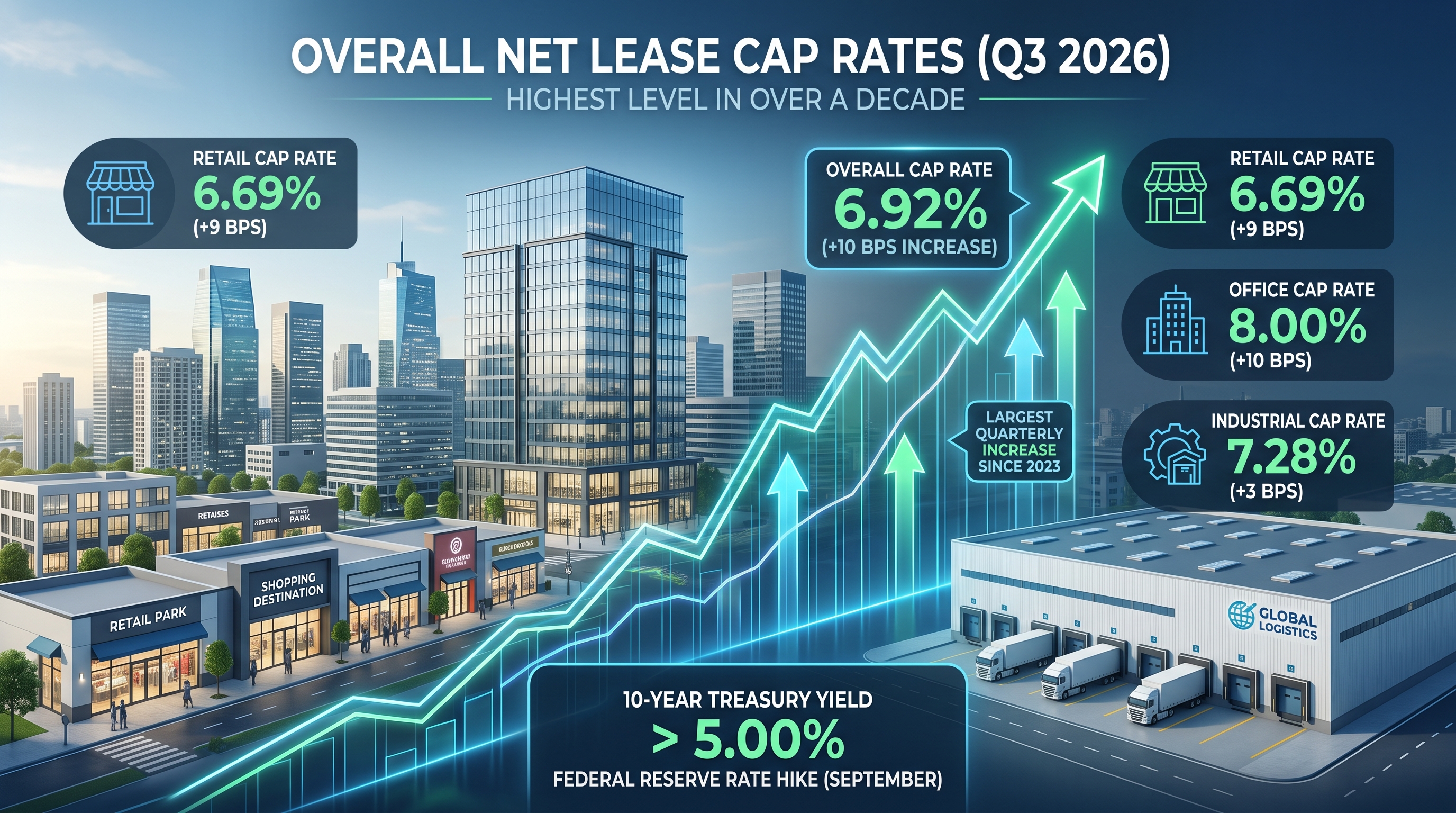
Net lease cap rates rose 10 basis points to 6.92% in the third quarter of 2026, the largest quarterly increase since 2023. It was the second consecutive quarterly increase and pushed overall cap rates to their highest level in more than a decade.
Higher borrowing costs are putting more pressure on pricing. Buyers who need financing are having a harder time making the numbers work, particularly on larger transactions. Sellers are facing a wider gap between their asking prices and what buyers are willing to pay.
Cap rates increased across all three sectors
The Boulder Group’s third-quarter research showed increases in retail, office, and industrial cap rates:
| Sector | Q3 2026 cap rate | Quarterly change |
| Retail | 6.69% | +9 basis points |
| Office | 8.00% | +10 basis points |
| Industrial | 7.28% | +3 basis points |
Industrial had the smallest increase, but all three sectors continued to face upward pressure from the capital markets.
Financing costs are weighing on buyer returns
The Federal Reserve raised its target range by 25 basis points to 3.75%–4.00% at its September meeting. The 10-year Treasury moved from the mid-4% range at the beginning of the quarter to above 5.00% by the end of September, its highest level since mid-2007.
With permanent financing generally priced above 6.50%, negative leverage remains a challenge. When the cost of debt exceeds a property’s cap rate, adding financing reduces the buyer’s initial return on equity. That creates particular pressure on larger properties, where buyers tend to rely more heavily on debt.
A higher cap rate doesn’t necessarily mean a better return for a leveraged buyer if borrowing costs have also increased. The financing terms matter as much as the change in pricing.
Buyers remain focused on tenant credit
The bid-ask spread widened by 3 basis points in both retail and industrial, reaching 25 basis points in each sector. Buyers and sellers moved further apart on pricing even as cap rates increased.
That gap remains narrower for properties with top-tier tenant credit and long-term leases. Capital markets uncertainty is putting more emphasis on tenant financial strength, and the most desired assets continue to hold a pricing advantage.
Private buyers and family offices also have another reason to consider certain property types. The permanent restoration of 100% bonus depreciation has supported demand for assets such as convenience stores and auto service facilities by allowing investors to accelerate depreciation on eligible property components.
Higher rates could affect fourth quarter activity
Net lease transaction activity entered the second half of 2026 with momentum following double-digit year-over-year growth through the second quarter. The fourth quarter is traditionally the busiest period as funds work to complete their annual allocations.
Higher rates could limit that year-end activity. Market participants expect another Federal Reserve increase before year-end, with expectations favoring the October meeting. The rise in Treasury yields and the possibility of another increase may make some transactions more difficult to complete.
For sellers, the issue is whether pricing reflects what buyers can support with today’s financing. For buyers, the opportunity depends on how much prices adjust relative to borrowing costs. That relationship will help determine how much of the market’s earlier transaction momentum carries through year-end.
Back